The Oregon Master Naturalist Program provides an opportunity to learn about natural resources through the study of scientifically sound information: the natural history of plants, animals, habitats, and geology, the history and processes of landscape change, as well as the most relevant topics in present-day sustainable natural resource management. Participants volunteer for natural resources programs, agencies, organizations, and other groups in their communities.
The Oregon Master Naturalist Program is for people interested in Oregon’s natural history and natural resources management who want to dedicate their time as volunteers.
How to Become an Oregon Master Naturalist
Your journey begins here!
You are about to set forth on a journey of learning, exploration, and service. To become a full-fledged Oregon Master Naturalist, there are several steps you must take. The Oregon Master Naturalist Program is ideal for those who wish to become certified Master Naturalists, but classes are open to anyone with interest, as space allows.
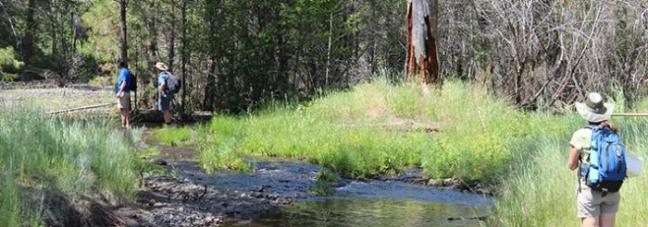
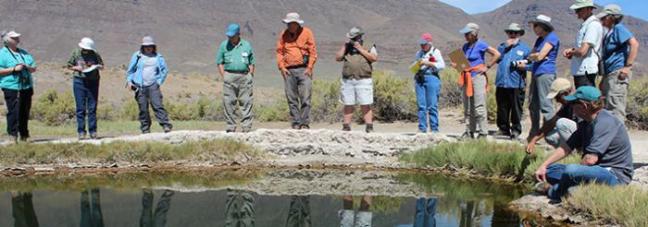
We currently offer courses in 5 Ecoregions, which are in-person coures taught within an ecologically distinct region of Oregon. You must take at least one Ecoregion to become an Oregon Master Naturalist (learn more).
3. Volunteer.
Once you have completed your coursework, you must volunteer for a natural resources oriented group or project for a minimum of 40 hours within the first full year after completing your coursework (learn more).
4. Maintain your certification.
To maintain your status as an Oregon Master Naturalist, you must continue to volunteer a minimum of 40 hours per year, and attend at least 8 hours of continuing education per year (learn more).
Ecoregion Field Courses
To become an Oregon State University Extension Master Naturalist, you must complete one Ecoregion field course. An Ecoregion course is a set of in-person classes taught within one of Oregon’s ecologically distinct regions. These field-based courses, taught by experts, introduce participants to a wide range of natural history and conservation topics relevant to a single Ecoregion. A typical course contains 6-8 all day classes. Full course participation is expected.
Fruitdale Grange, 1440 Parkdale Drive,
Grants Pass, OR 97527
Overview
All over our state and country there are disasters that happen—fires, earthquakes, tornadoes, floods, tsunamis, blizzards and even occasional dislocations of essential food and water due to economic disasters. In order to encourage greater preparedness here in Josephine County, the Fruitdale Grange is hosting a Disaster Preparedness Planning Conference this Spring, before fire season.
We invite all governmental and other organizations to attend, such as: county emergency services, public health department, hospitals, schools, police, sheriff, fire departments, State Fire, water agencies, ODT & debris clearing agencies, city councils, Board of Commissioners, Human Services, CERT emergency responder organizations, service clubs, churches, synagogues, Red Cross, SPCA, Humane Society, homeless services, charities, food security experts, regional medical reserve corp., community radio stations and ham radio organizations, hardware stores, local food stores and farmers groups.
We will encourage all to frame the dialogue positively as exploring disaster risks, identifying greatest unmet needs and how we can work together to augment existing plans and develop greater regional preparedness.
We envision a matchmaking format wherein government agencies briefly state what they need help with and non-profits, stores, churches and service organizations state what they can help with. We look forward to working with all of you.
Please RSVP to help us plan for the space, with your name, organization and how many people will be attending to Jerry Allen at jerryallengitfiddler@gmail.com. Send any questions to the same email address. Thank you.
“Using secrets discovered in the original Blue Zones—rare longevity hotspots around the world—we help transform communities into thriving places to live, work, eat, and play.” Blue Zones Project
Blue Zones Project–Grants Pass started the new year with a free and family-friendly public Kickoff celebration.
Held at Grants Pass High School on January 20th, the Kickoff attracted more than 600 community members who spent their afternoon exploring ways to be healthier and happier, and learning how to help improve the well-being of their community.
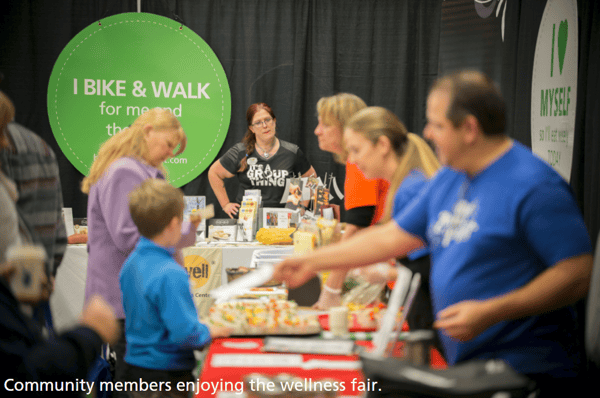
The upbeat Kickoff featured demonstrations by Club Northwest of tai chi, yoga, and aerobics, as well as a rousing performance by the Grants Pass High School Jazz Band. Attendees enjoyed a wellness fair featuring local well-being organizations and resources.
A highlight of the event was a panel discussion hosted by Dr. Robin Miller, well-known author and KOBI-TV health expert. The panel featured Peggy Maguire, president of Blue Zones Project leadership funder, Cambia Health Foundation, and Sarah Foster, executive director of Oregon Healthiest State, a Blue Zones Project partner.
At the heart of the Kickoff was a keynote presentation by Nick Buettner, one of the original Blue Zones researchers and current Blue Zones community and corporate program director. After discussing the lifestyles and secrets of people living in the original Blue Zones around the globe, Buettner asked the crowd to make a personal commitment to their own and their community’s well-being. Nearly 300 people signed the pledge to make healthy lifestyle changes in their own lives.
“Community leaders and volunteers have worked hard over the last few months to develop our strategic plan and this Kickoff event is the official launch of Blue Zones Project in our community. We hope individuals and families will join us to learn and experience how we can all live longer, better lives,” said Diana Hoover, Blues Zones Project community program manager. “By focusing on helping change the settings where people spend most of their time we can make healthy choices easier, and we can make Grants Pass an even better place to live, work, learn, pray, and play.”
Blue Zones Kickoff events follow the expansion of a community well-being transformation strategy led by Oregon Healthiest State, an initiative focused on supporting communities in building a culture of health. Blue Zones Project was brought to Oregon by Cambia Health Foundation in support of Oregon Healthiest State. Community champions Asante Health System, AllCare Health, Primary Health of Josephine County, and Siskiyou Community Health Center are providing support for the Grants Pass initiative. Office space is being donated by Club Northwest.
“Our vision is for Oregon to be the healthiest state in the nation” Sarah Foster of Oregon Healthiest State told the audience. “To do this we have partnered with Blue Zones Project to create opportunities for lasting well-being transformation. It is so inspiring to see the Grant Pass initiative move from planning to implementation, especially knowing how much local thinking and leadership is guiding the work. The Kickoff celebration is an exciting milestone in the life of the initiative and I am greatly looking forward to it.”
Blue Zones Project – Grants Pass Team
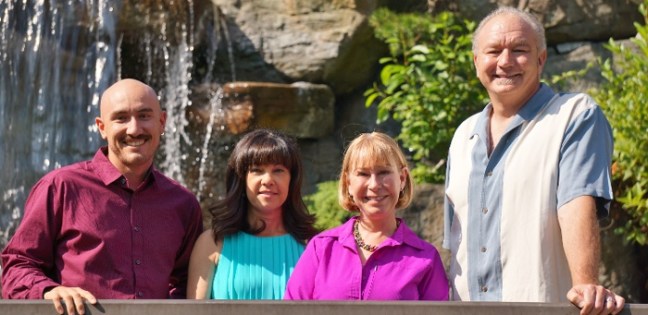
Diane Hoover Before serving for six years at the Josephine County Health Department, Hoover spent 26 years in the United States Navy Medical Service Corps. Her role, as Community Program Manager for the Blue Zones Project, will be to direct the execution of the initiative; to work directly with advocates, leaders, and volunteers; and to help drive policy priorities set by the community.
George Prokop Having previously launched programs and services worldwide while working for Hewlett-Packard for 30 years, Prokop brings a broad set of experiences to the team. He will be responsible for planning, executing, and finalizing projects while ensuring that programs stay aligned with Blue Zones Project strategies.
Cort Cox Cox joins the Grants Pass Blue Zones team after two years with the Blue Zones Project—Klamath Falls initiative. Cox is passionate about working closely with the community to create positive individual change. His role will focus on driving communication efforts for the initiative while managing activities to inspire people to engage with Blue Zones Project practices and resources.
Denise Kalic With more than 20 years of experience in sales and business development, most recently with Harry & David and Lithia Motors, Kalic will be working directly with organizations across the region including grocery stores, schools, and worksites, helping them create settings that encourage improved well-being for the people they serve.
A COMMUNITY-WIDE APPROACH TO WELL-BEING
We don’t just rely on individual behavior change. We improve community health by making permanent and semi-permanent changes on multiple levels. We improve or optimize city streets (smoking policies, bike lanes, sidewalks), public spaces (parks, lakes, walking paths), schools (cafeterias, safe walking paths to school), restaurants, grocery stores, employers, faith-based organizations, and community involvement.
We need to educate ourselves and educate each other to learn the basic principles of ecology and systemic thinking and then we need to filter this through the local conditions and the local culture to create something that is lasting, sustainable and effective.— Fritjof Capra
Nature is sustainable because it is regenerative. That is the key lesson.
— Fritjof Capra
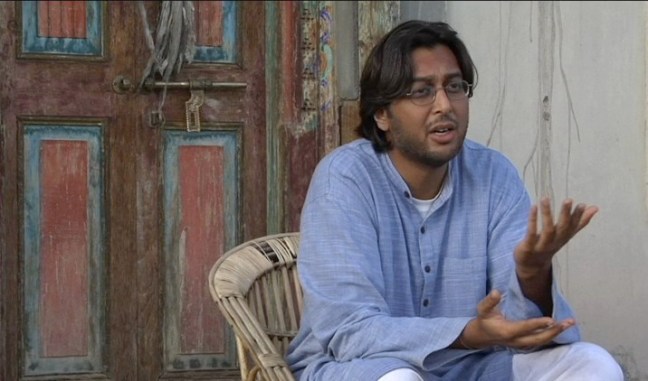
Manish Jain lives in Udaipur, Rajasthan, in North India. He works with a movement called Shikshantar, ‘The Peoples’ Institute for Rethinking Education and Development’. He has been working for the last 20 years, initiating many projects around unlearning, sustainable living, and Gift Culture. He is also co-founder of Swaraj University – India’s first university dedicated to localization. You can read more about his work here. He very kindly spent a fascinating hour chatting to me via Skype…
To read interview – watch the video and listen to the podcast go here
Environmental Workshop – FREE Saturday, February 3, 2018 at Wild River Pub in Grants Pass
533 NE F Street, Grants Pass, OR 97526 12:00 – 4:00 p.m.
This FREE workshop, organized by Rogue Indivisible, is an excellent chance to
learn from local experts about our complex southwest Oregon environment, what
makes it unique, and what we can do to help in sustainable management of our
region’s natural resources.
• Overview of SW Oregon’s Ecological Systems – Dr. Tom Atzet,
Ecologist
• A Rogue Climate in Our Valley: Trends, Projections, Consequences
– Dr. Alan Journet, Co-Facilitator, Southern Oregon Climate Action
Now
• What is Restoration Forestry and Why is it Important? – Gary
Clarida, Restoration Forester
• 25 Things You Can Do to Help Save Our Rogue Valley Environment
– Bob Bath, High School Science Teacher
• Local Recreational Trails and Collaboration to Benefit Rogue
Valley Economy and Communities – Hope Robertson, Founder/
President Siskiyou Upland Trails Association
• The Ecology of Relationships: Community Collaboration in
Natural Resource Management – Jack Shipley, Founder, Applegate
Partnership
• Wrap-Up Panel Discussion – All Presenters available for Questions
No fee for attending! Space is limited. Please register early!
Coffee, tea, water and light snacks will be provided.
Email eco-team@rogueindivisible.org to sign up or register online at rogueindivisible.org – Click on Issues, then on Environment and scroll down to the registration link under Environmental Workshop rogueindivisible.org
February 16th– Meet at the Josephine Building parking lot between 10 am and 2 pm
Volunteers Needed for Trail Construction
March 16th – Meet at the Josephine Building parking lot between 10 am and 2 pm
Volunteer opportunities are scheduled for anyone to get involved. Students are welcome and encouraged to experience this project firsthand.
For more info or directions contact the Project Manager, Chas Rogers, at crogers@roguecc.edu.
Rogue Community College and Sustainable Rogue Valley are working together to complete the demonstration Raingarden and Bioswale on the Redwood Campus. This project has been funded by the Oregon Watershed Enhancement Board to construct the initial work of digging the drainage basin and filling with mulch and was completed during the summer of 2017 by the local Williams Creek Watershed Council.
Volunteers are needed to help complete the project. Sustainable Rogue Valley is a local concerned group working to find solutions to making our world a more livable place for all. We offer community service projects and education about bioswales, raingardens, and other sustainable ideas. Individuals and local groups interested in getting involved in planting, shaping, and maintaining this active demonstration project can visit our website, sustainableroguevalley.org, for more information. If you would like to help with completing the Raingarden contact the Project Manager, Chas Rogers, at crogers@roguecc.edu.
Volunteer opportunities are scheduled for anyone to get involved. Students are welcome and encouraged to experience this project firsthand. This winter we will be completing our wetland and flower planting on February 16th. On March 16th we will construct our trail designed to encourage people to walk and discover the project. On Earth Day at Redwood Campus, April 19th we will have tours of the site and plan to install more signs describing the project. Please feel free to show up at the Josephine Building parking lot between 10 am and 2 pm on Feb 16th or March 16th.
Raingardens collect rainwater runoff in basins and ponds encouraging water to slow down and filter through plant roots and seep into the ground. With a healthy and varied plant community, it can produce a pleasing environment while providing a vital function in the watershed. The RCC Raingarden collects runoff from the campus and filters it through a bioswale.
Bioswales are made to collect rainwater runoff and filter through wetlands where unique wetland plants are growing. These plants can help break down pollutants such as oil from parking lots and roadways as they filter into the ground during runoff. Bioswales contain organic matter that acts as a sponge along with plants that hold and break down contaminants from impervious landscapes such as parking lots and roads.
The wetlands on RCC campus collect runoff, filter and clean contaminants from several parking lots, letting water seep into the ground or enter the natural drainage systems. Signs posted onsite help explain the project and its goals, showing the pattern of runoff, types of wetland plants growing, and how this could help clean water and improve watershed health. We hope this demonstration site will inspire others to build Raingardens and Bioswales to improve water quality and beautify the landscape.
We are joining with the Unitarian Universalists at a table at this years Siskiyou Film Festival. We hope you will support KS Wild by going to the FilmFest on Sunday afternoon from 3 pm – 8 pm for several hours of wonderful entertainment, education and good locally sourced food by Chef Kirsten.
Learn more about the recently funded RCC RainGarden and Bioswale Project we will be doing in collaboration with the RCC folks in 2017-18. We are beginning the planning for it at the February 26th meeting.If you are interested in helping or learning more come to the February meeting.
A part of the site of the upcoming RCC RainGarden and Bioswale Project
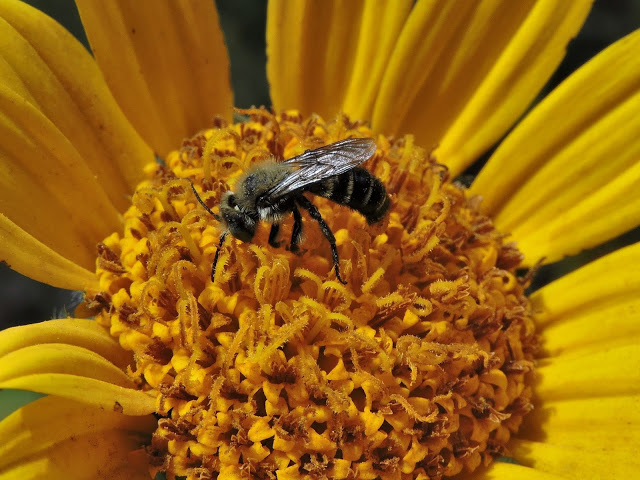
Then, at the March meeting, we are fortunate enough to have Travis Owen, a local wild bee expert (or “amateur anthecologist”!) speaking to us about our local bees and ways we can protect and support them as well as learn to recognize them! This will be on March 26th at the UU Fellowship at 12:30 pm. We hope you will join us! Find lots of interesting material on bees, wasps and moths on his website: http://www.amateuranthecologist.com/
I hope that everyone is getting off to a good new year. I wanted to let you know about upcoming opportunities for restoration plantings on a few small streams in our area.
Gilbert Creek Park (Grants Pass):
Jan 279:00 – 2:00 pm: Prep, willow cutting
Feb 38:30/9:00 – 2:00 pm: Planting (some high school kids will hopefully be joining us).
Blue Heron Park (Phoenix) :
Feb 6 Noon-3:00 pm: With Phoenix High School. We would gladly take 2-4 volunteers here in the morning to help with willow cuttings for the kids.
Feb 9 – 9:00 am – early afternoon Willows cutting and planting, some brushwhacking, re-fencing trees to protect against the beaver, prep for irrigation
Feb 23 – 9:00 am – early afternoon – Trees and irrigation laying
Thompson Creek (Selma) with Oregon Stewardship:
Feb 16 – If a few volunteers would like to join here, that would be great. Please let me know beforehand. Otherwise, Jim Hutchins will have most of this taken care of, but I’ll be joining him.
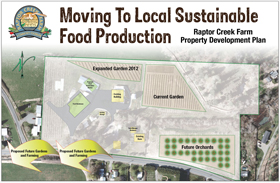
Our next Sustainable Rogue Valley meeting on Sunday Dec. 4 features guest speaker Gif Gates, Manager of Raptor Creek Farm.
Gif will share about the farm and the Josephine County Food Bank’s vision and strategy for long term food security. Come hear about the history of Raptor Creek Farm, their clients and the statistics of food insecurity in Jo Co, the youth and senior programs at the farm, current development and future projects, community involvement at the food bank farm, how folks can get involved, and more!
Due to the holidays, our next Sustainable Rogue Valley meeting will be on Sunday December 4 (not our usual 4th Sunday schedule)
We now meet at the new UU church, 129 NW E street, GP, 12:30 to 2pm.
It’s easy to find, across the street from Mamosa’s!
Volunteers Needed on Friday, October 14, 2016 – 10:00 am
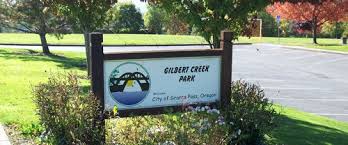
Volunteers are needed to help remove invasive berry bushes at the Gilbert Creek Park at 1750 NW Hawthorne Ave, Grants Pass, OR
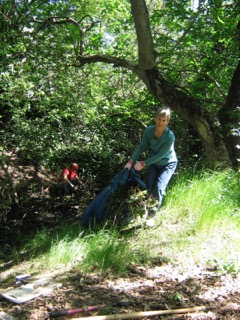
Meet at the Creek at 10 am and — bring loppers or clippers, — wear study shoes — and thick gloves, — bring water and snacks to keep going.
Deb Berg is the organizing force and generous heart behind this worthy project.
Please contact her if you can help on next Friday Oct. 14th, or if you want to be on the volunteer list for this inspirational creek restoration project. It will be going on for a while!
Deb Berg: cell 541-660-2541 dberg@grantspass.k12.or.us
Share the good news about this project to restore our Creek Restoration Demonstration Park at Gilbert Creek that has fallen into disrepair.
Grant money has been obtained and we’re moving forward to polish this Gem.
In early June Mike Nelson completed and installed an Insect Hotel in the Bees and Pollinators bed at the Firewise Gardens project at the Fairgrounds! As you can see from the picture it’s truly a work of art! Each section is created as habitat for a different sort of pollinator insect.
These “Insect Hotels” are extremely popular in Europe where the natural habitats have been decimated by human populations, and so farmers, homeowners, parks and schools have taken to creating sometimes very large and elaborate “insect hotels” in order to compensate. They can be as small and simple as a coffee can filled with bamboo tubes to the type of thing Mike created and much much larger. Do a Google Image search for “Insect hotel” and you will see dozens of examples.
This bed also includes a “watering tray” since bees and other pollinators need water, too. It’s a small clay tray filled with sand and pebbles allowing safe and easy access to the water without drowning. Next to this tray is a bare sandy “bank” surrounded by grasses that can act as a nesting site for the many types of ground nesting bees native to Oregon.
The garden is also filled with a variety of plants that will bloom from late winter through the summer, offering ongoing food (nectar).
The signage for the beds will come soon – but in the meantime you won’t have any trouble finding Mike’s wonderful Insect Hotel. Go to the Josephine County Fairgrounds and check it out – second bed on the left!
Why the rise of green energy makes utility companies nervous.
From the June 2015 New Yorker Magazine article by Bill McKibben
CONSTRUCTION BY STEPHEN DOYLE / PHOTOGRAPH BY ERIC HELGAS
Mark and Sara Borkowski live with their two young daughters in a century-old, fifteen-hundred-square-foot house in Rutland, Vermont. Mark drives a school bus, and Sara works as a special-ed teacher; the cost of heating and cooling their house through the year consumes a large fraction of their combined income. Last summer, however, persuaded by Green Mountain Power, the main electric utility in Vermont, the Borkowskis decided to give their home an energy makeover. In the course of several days, coördinated teams of contractors stuffed the house with new insulation, put in a heat pump for the hot water, and installed two air-source heat pumps to warm the home. They also switched all the light bulbs to L.E.D.s and put a small solar array on the slate roof of the garage.
The Borkowskis paid for the improvements, but the utility financed the charges through their electric bill, which fell the very first month. Before the makeover, from October of 2013 to January of 2014, the Borkowskis used thirty-four hundred and eleven kilowatt-hours of electricity and three hundred and twenty-five gallons of fuel oil. From October of 2014 to January of 2015, they used twenty-eight hundred and fifty-six kilowatt-hours of electricity and no oil at all. President Obama has announced that by 2025 he wants the United States to reduce its total carbon footprint by up to twenty-eight per cent of 2005 levels. The Borkowskis reduced the footprint of their house by eighty-eight per cent in a matter of days, and at no net cost.




 Diane Hoover



 Environmental Workshop – FREE
 Volunteers Needed for Planting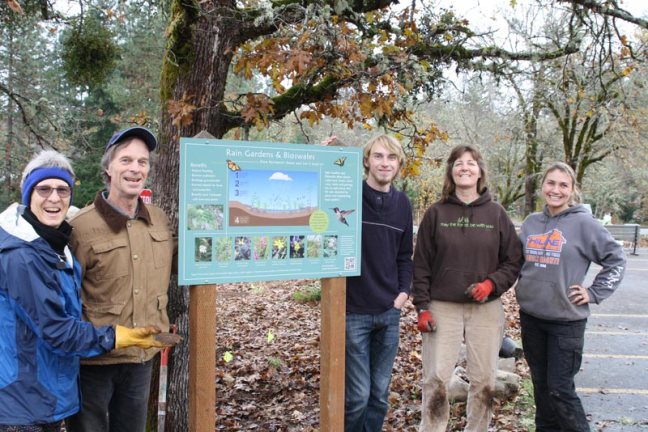




 Deb Berg is the organizing force and generous heart behind this worthy project.
 In early June Mike Nelson completed and installed an Insect Hotel in the Bees and Pollinators bed at the Firewise Gardens project at the Fairgrounds! As you can see from the picture it’s truly a work of art! Each section is created as habitat for a different sort of pollinator insect.
 sustainableroguevalley.org