RCC Rain Gardens and Bioswales

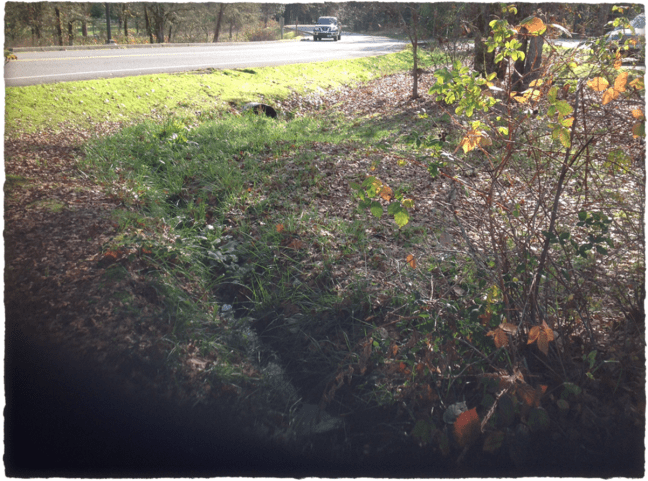
Proposed Bioswale area at RCC

Sustainable Rogue Valley, in conjunction with other funders, is planning to construct Raingardens and Bioswales on the Rogue Community College property in Grants Pass, Oregon. Raingardens are made to collect rainwater in ponds and maintain a healthy plant community while encouraging water to slow down and filter into the ground. They produce a pleasing environment while providing a vital function in the watershed. Plant communities can be focused on butterfly migration, bees and insects, as well as firewise resistant plants.

Bioswales are made to collect rainwater runoff and filter through wetlands where unique wetland plants are growing. These plants will help break down pollutants such as oil from parking lots and roadways as they filter into the ground during runoff. Bioswales contain organic matter that acts as a sponge along with plants that hold and break down contaminants from impervious landscapes such as parking lots and roads.

The wetlands on RCC campus will collect runoff, filter and clean contaminants, and send the water downstream or into the ground to enter the natural drainage systems. There are several wetland sites planned in this project that will receive runoff in a series of bioswales designed around the existing culverts and drainage patterns. Signs posted onsite will explain the project and its goals, showing the pattern of runoff, types of wetland plants growing, and how this could help clean water and improve watershed health. We hope this demonstration site will inspire others to build Raingardens and Bioswales to improve water quality and beautify the landscape.

Sustainable Rogue Valley is an affinity group to the Grants Pass Universal Universalists, and is associated with Rogue Community College Faculty and Facilities Department. SRV has received funding from The Ashland Food Coop and is also applying for restoration grants from Oregon Watershed Enhancement Board through the Rogue Valley Small Grant Team. Support is sought from Rogue River Watershed Council as well as Rogue Basin Partnership, and the Rogue Community College Green Team. This will be a collaborative effort to bring communities together to show how sustainable practices can benefit everyone.

rccraingardenproject1
Future bioswale at RCC

Bees of 2016 of Southwestern Oregon

The following is by Rogue River resident Travis Owen:
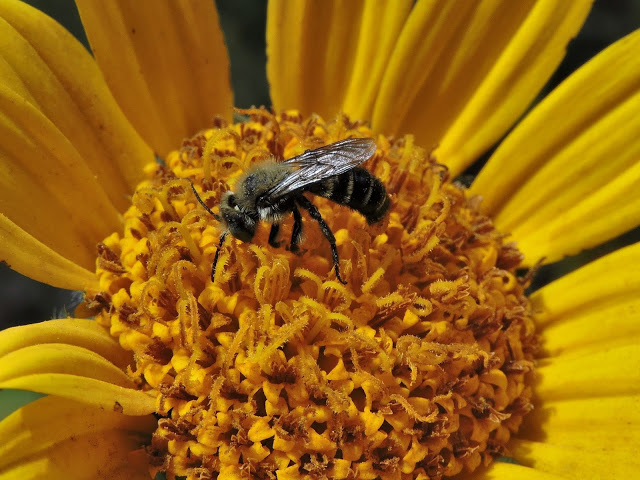
This is an article I wrote about the (mostly native) bees I photographed this year in the Rogue Valley, at least 21 species in 4 families are represented in photos along with some personal observations and life histories. One particularly interesting discovery, bees are basically fuzzy vegan wasps that developed branched hairs adapted to carrying pollen to feed their young (true wasps have simple hairs and are, for all intensive purposes, carnivores).
Travis Owen  — The Amateur Anthecologist

beesofsouthwestoregon

When most people hear the word bee, images of honeybees (Apis mellifera, Apidae) and the associated tales of declines come to mind. However, bees are much more diverse and interesting than the honeybee leads one to believe. There are at least thirty-five hundred species of native bees in America north of Mexico alone, and over twenty-thousand described species worldwide (probably many more). They live diverse lifestyles, but unlike the honeybee most live solitary lives. A similar variance can be seen in wasps, particularly predatory wasps which bees evolved from….

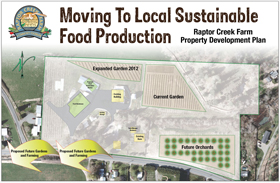
Moving to Local Sustainable Food Production

raptorcreekfarmprogram

Our next Sustainable Rogue Valley meeting on Sunday Dec. 4 features guest speaker Gif Gates, Manager of Raptor Creek Farm.
Gif will share about the farm and the Josephine County Food Bank’s vision and strategy for long term food security. Come hear about the history of Raptor Creek Farm, their clients and the statistics of food insecurity in Jo Co, the youth and senior programs at the farm, current development and future projects, community involvement at the food bank farm, how folks can get involved, and more!
Due to the holidays, our next Sustainable Rogue Valley meeting will be on Sunday December 4 (not our usual 4th Sunday schedule)
We now meet at the new UU church, 129 NW E street, GP, 12:30 to 2pm. 
It’s easy to find, across the street from Mamosa’s!

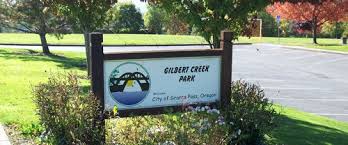
Gilbert Creek Park Restoration Project

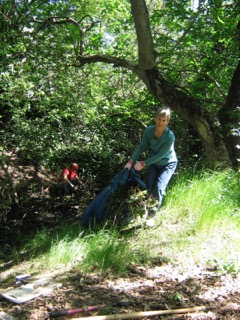
Volunteers Needed on Friday, October 14, 2016 – 10:00 am

Volunteers are needed to help remove invasive berry bushes at the Gilbert Creek Park at 1750 NW Hawthorne Ave, Grants Pass, OR

Meet at the Creek at 10 am and
   — bring loppers or clippers,
   —  wear study shoes
   —  and thick gloves,
   —  bring water and snacks to keep going.

gilbertcreekparkrestorationDeb Berg is the organizing force and generous heart behind this worthy project.

Please contact her if you can help on next Friday Oct. 14th, or if you want to be on the volunteer list for this inspirational creek restoration project. It will be going on for a while!
Deb Berg:  cell 541-660-2541
dberg@grantspass.k12.or.us

Share the good news about this project to restore our Creek Restoration Demonstration Park at Gilbert Creek that has fallen into disrepair.

Grant money has been obtained and we’re moving forward to polish this Gem.

Sustainable Rogue Valley’s “Cleaner Air Grants Pass” Event

Nicholas Caleb, the Staff Attorney for Portland based Neighbors for Clean Air will join us Friday, Sept. 9, 10am to 1pm at 1205 SE Harvey Drive, Grants Pass, home of Michelle and David Keip. Anyone interested is welcome. For RSVP or more info contact Michelle Keip 541-244-1885.

stethoscope_airNick will provide an explanation of how Oregon’s current air regulatory program works, an update on the Cleaner Air Oregon process to date, what to expect in the future, what air quality advocates are seeking through the reform process, and how you can become a strong advocate for clean air in our community. The intent is to help us prepare before the Sept. 13th Clearer Air Oregon public forum in Medford and to discuss the Industrial Emmissions Regulatory Reform process that is underway right now. Nick has been involved in environmental advocacy at the legal, policy, grassroots advocacy and academic levels.

Bertie and the Birdbath

Permaculture-birdbat
The Hypertufa birdbath created by Bertie Foltz.


Thanks to Bertie Foltz and her talent in making objects with hypertufa, a special lightweight concrete mix, we have a birdbath for the Permaculture Garden bed at the Fairgrounds. It is filled regularly with special dripper in the irrigation system. The advantage to having it on the ground is that frogs and toads and other small creatures will have access to it. The disadvantage – if you have a cat is that they will have access to those creatures as well as the birds.

Thanks for the birdbath, Bertie!


Insect Hotel installed at Fairgrounds

Mike&InsectHotelIn early June Mike Nelson completed and installed an Insect Hotel in the Bees and Pollinators bed at the Firewise Gardens project at the Fairgrounds! As you can see from the picture it’s truly a work of art! Each section is created as habitat for a different sort of pollinator insect.
These “Insect Hotels” are extremely popular in Europe where the natural habitats have been decimated by human populations, and so farmers, homeowners, parks and schools have taken to creating sometimes very large and elaborate “insect hotels” in order to compensate. They can be as small and simple as a coffee can filled with bamboo tubes to the type of thing Mike created and much much larger. Do a Google Image search for “Insect hotel” and you will see dozens of examples.

This bed also includes a “watering tray” since bees and other pollinators need water, too. It’s a small clay tray filled with sand and pebbles allowing safe and easy access to the water without drowning. Next to this tray is a bare sandy “bank” surrounded by grasses that can act as a nesting site for the many types of ground nesting bees native to Oregon.

The garden is also filled with a variety of plants that will bloom from late winter through the summer, offering ongoing food (nectar).

The signage for the beds will come soon – but in the meantime you won’t have any trouble finding Mike’s wonderful Insect Hotel. Go to the Josephine County Fairgrounds and check it out – second bed on the left!

The Japanese Town That Produces No Trash [VIDEO]

Trash is a big problem around the world. Our society creates a ton of waste, with the average person producing 4.3 of trash a day according to the Duke Center for Sustainability. Kamikatsu, Japan has a population of 1,700, but despite that they produced no waste last year. Their trash success is thanks to an extensive recycling system, which puts trash into 30 plus separate categories for repurposing. Take a look at this video for a rundown of how 1,700 were able to produce less trash last year than a single person here does in one day.

Source: The Japanese Town That Produces No Trash [VIDEO]

Invasive species will save us: The new way we must think about the environment now – Salon.com

Nature no longer congregates where we expect to find it — so conservationists must radically rethink priorities…

Source: Invasive species will save us: The new way we must think about the environment now – Salon.com

This article in Salon Magazine is an excerpt from Fred Pearce’s new book called “The New Wild: Why Invasive Species Will Be Nature’s Salvation”. It’s a fascinating look at the way species of plants and animals are actually moving around and adapting to unusual environments (like cities!) and will give you a fresh look at the whole idea of “invasive species”…

Communities Grow Stronger with Fruit Tree Projects

Photo By Heike Brauer

Fruit Tree Projects are helping feed communities all over the world. Here’s how the Santa Cruz fruit tree project got started.

By Maria Grusauskas, from Shareable.

Article courtesy of Utne Reader

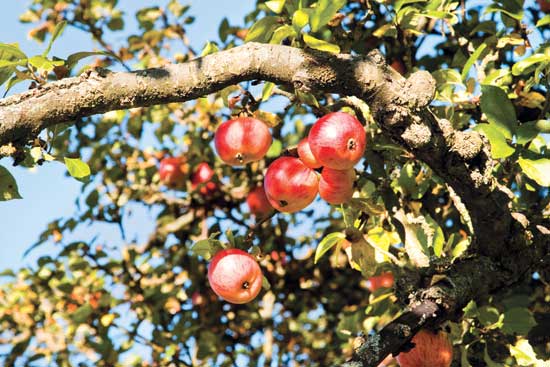
Over the past few years, “Fruit Tree Projects” have been popping up all over the world, from Vancouver and Portland, to New Orleans, to Fiji and Australia and beyond. They start small, with just one or two proactive individuals who are pained by the sight of perfectly good fruit in the late stages of decomposition.

Some Fruit Tree Projects redistribute their fruit harvests to undernourished communities, while others gobble them up themselves, and many celebrate the harvest by getting together and processing large quantities of fruit into any number of delicacies.

Even with the variations in types of Fruit Projects out there, one basic truth remains the same: the only thing standing between a hungry belly and the world’s excess fruit supply is a knock on a neighbor’s door.

For Steve Schnaar, (whose childhood memories include picking apples with his family), knocking on doors to inquire about overladen fruit trees was a hobby that soon blossomed into the Santa Cruz Fruit Tree Project, now in its third year in Santa Cruz, California.

“I have a long history of knocking on people’s doors and saying ‘it looks like you have more apples than you can handle,’ or cherries, or whatever it may be, and it’s usually true—most people with a big tree aren’t using it all, or are happy to share,” says Schnaar.

“Sure, a lot of people are intimidated to knock on strangers’ doors … but I don’t have that problem. People can say no if they want to say no.”

The success rate is surprisingly high, especially because most people—especially if they live alone—can’t eat all of the fruit produced by a single tree, and Schnaar estimates about nine out of 10 people say yes to sharing their excess.

Do-it-yourself fruit processing is at the heart of The Santa Cruz Fruit Tree Project, and the community that’s been growing out of it. Most harvests are followed by a gathering that teaches how to preserve the fruit they harvest—from drying persimmons using the traditional Japanese method Hoshigaki, to fermenting the fruit into wine with local DIY winemakers. They’ve also hosted apple cider pressing parties (with a bike-powered press, of course), made vinegar and countless preserves, from marmalades to chutneys. And when there’s still too much fruit to go around, or the fruit is a little bit too mushy to give away, the chef of local restaurant India Joze often finds a culinary use for it.

The post-harvest events bring together growers, community members, and local food experts, and they’re a birthplace for lasting relationships and useful skills promoting a sustainable culture.

Schnaar’s project would have fizzled out had it not been for his devotion to it, and the whole-hearted embrace it has received from the community. Most of the fruit hosts have welcomed him and his fruit harvesters back each year, and the word is spreading. Harvests that used to see only a handful of people are now numbering dozens to even 40 or 50 people.

Read this article in its entirety, including an interview with Steve Schnaar at Shareable.

COWSPIRACY: The Sustainability Secret

COWSPIRACY: The Sustainability Secret, is a groundbreaking feature length environmental documentary, following an intrepid filmmaker as he uncovers the most destructive industry facing the planet today and investigates why the world’s leading environmental organizations are too afraid to talk about it. This shocking yet humorous documentary is as eye-opening as “Blackfish” and as inspiring as “An Inconvenient Truth”.

Source: COWSPIRACY: The Sustainability Secret