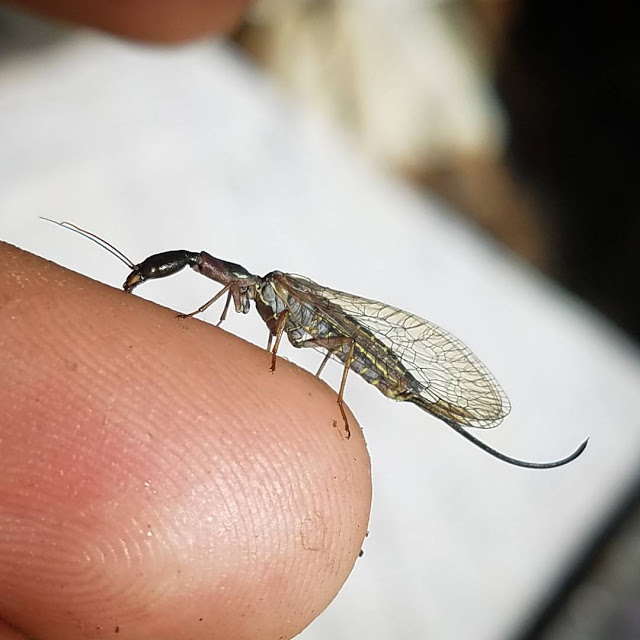
“Hi! This is about parasitic wasps, some of the coolest wasps. They’re kind of like H.R. Giger’s Alien (you know, like the one that burst out of John Hurt’s chest in 1979). You may not like wasps, but they’re pretty fascinating nonetheless. They’re pretty useful biocontrol agents, and though you might not see them you would notice the difference if they were gone. I learned some interesting things about parasitoid venoms and mating strategies. Have a read, or maybe just check out the pictures.” Travis Owen
Anyone that knows me knows that I love wasps. I think you should love them, too. Here I will attempt to familiarize you with the world of the non-stinging wasps known as the parasitoids. Parasitic wasps do not have true stings, as the aculeate wasps [and bees] do. These parasitoids have ovipositors, which are used to lay, or sometimes inject, eggs. While there are aculeate parasitoids, the aculeates do not have ovipositors. (The exception is the Chrysididae, the cuckoo wasps, which are aculeates which evolved their own unique ovipositors independently from the parasitoids featured in this piece.) The aculeate sting evolved from an ovipositor many millions of years ago…. READ MORE
“Drawdown is based on meticulous research that maps, measures, models, and describes the most substantive solutions to global warming that already exist. It is the most important goal for humanity to undertake.”
#1 Best-Selling Environmental Book of 2017
Here is a link to a list of the top 100 Solutions to Reverse Global Warming. All of it is so positive and hopeful that it’s well worth sharing. Many of us are already aware of the direness of our global situation and because so much of the news we get is simply scary, it often generates a feeling of hopelessness in many of us. Perhaps it is that feeling of hopelessness that keeps people from doing the small things like replacing plastic bags with their own cloth bags at stores.
It seems critically important that we understand that it is NOT hopeless – that there are things we humans are already doing that can work if they are supported and expanded upon.
Here are just a few of the Solutions listed on Drawdown’s website that are related to gardening, growing food and permaculture – with the rating number and a link to the small article:
“The objective of the solutions list is to be inclusive, presenting an extensive array of impactful measures already in existence. The list is comprised primarily of “no regrets” solutions—actions that make sense to take regardless of their climate impact since they have intrinsic benefits to communities and economies. These initiatives improve lives, create jobs, restore the environment, enhance security, generate resilience, and advance human health.”
#11 – REGENERATIVE AGRICULTURE
The Rodale Institute farm in Kutztown, PA: 333 acres of formerly degraded farmland restored to productivity and biosequestration through regenerative agriculture.
Conventional wisdom has long held that the world cannot be fed without chemicals and synthetic fertilizers. Evidence points to a new wisdom: The world cannot be fed unless the soil is fed. Regenerative agriculture enhances and sustains the health of the soil by restoring its carbon content, which in turn improves productivity—just the opposite of conventional agriculture.
Regenerative agricultural practices include:
no tillage,
diverse cover crops,
in-farm fertility (no external nutrients),
no pesticides or synthetic fertilizers, and
multiple crop rotations.
Together, these practices increase carbon-rich soil organic matter. The result: vital microbes proliferate, roots go deeper, nutrient uptake improves, water retention increases, plants are more pest resistant, and soil fertility compounds. Farms are seeing soil carbon levels rise from a baseline of 1 to 2 percent up to 5 to 8 percent over ten or more years, which can add up to 25 to 60 tons of carbon per acre.
It is estimated that at least 50 percent of the carbon in the earth’s soils has been released into the atmosphere over the past centuries. Bringing that carbon back home through regenerative agriculture is one of the greatest opportunities to address human and climate health, along with the financial well-being of farmers.
Come join us for Gary’s famous cookies and interesting conversation about important issues, with interesting people who care about making our world a better place for all of us to live! Some of the topics we will discuss this month are:
Report on the Rogue Indivisible This Land is Your Land workshop
Fairgrounds Gardens
RCC Raingarden and Bioswale
Stream School (April 14) at RCC
Earth Day (April 19) at RCC
Blue Zone Project
Sustainability Class
Local Recycling
ACES
See you at the UU Fellowship at 129 NW E Street, Grants Pass, OR
We need to educate ourselves and educate each other to learn the basic principles of ecology and systemic thinking and then we need to filter this through the local conditions and the local culture to create something that is lasting, sustainable and effective.— Fritjof Capra
Nature is sustainable because it is regenerative. That is the key lesson.
— Fritjof Capra
Native bees are an unappreciated treasure, with 4,000 species from tiny Perdita to large carpenter bees, they can be found anywhere in North America where flowers bloom.
Most people don’t realize that there were no honey bees in America until the white settlers brought hives from Europe. These resourceful insects promptly managed to escape domestication, forming swarms and setting up housekeeping in hollow trees, other cavities or even exposed to the elements just as they had been doing in their native lands.
Native pollinators, in particular bees, had been doing all the pollination in this continent before the arrival of that import from the Old World. They continue to do a great deal of it, especially when it comes to native plants.
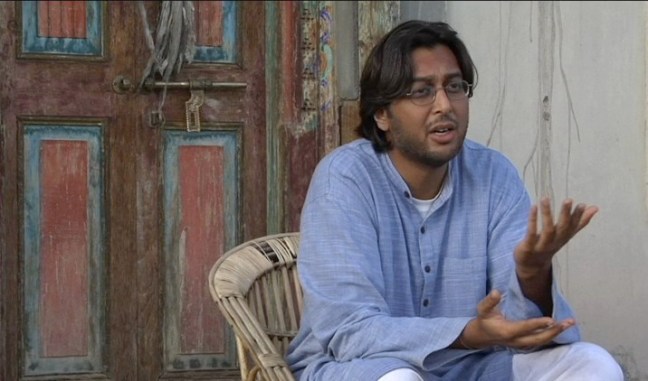
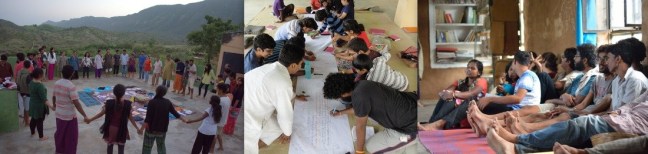
Manish Jain lives in Udaipur, Rajasthan, in North India. He works with a movement called Shikshantar, ‘The Peoples’ Institute for Rethinking Education and Development’. He has been working for the last 20 years, initiating many projects around unlearning, sustainable living, and Gift Culture. He is also co-founder of Swaraj University – India’s first university dedicated to localization. You can read more about his work here. He very kindly spent a fascinating hour chatting to me via Skype…
To read interview – watch the video and listen to the podcast go here
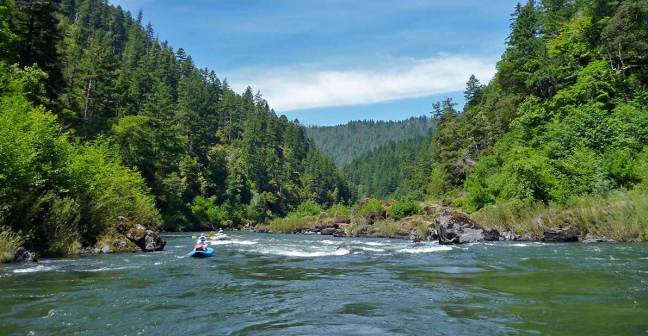
Environmental Workshop – FREE Saturday, February 3, 2018 at Wild River Pub in Grants Pass
533 NE F Street, Grants Pass, OR 97526 12:00 – 4:00 p.m.
This FREE workshop, organized by Rogue Indivisible, is an excellent chance to
learn from local experts about our complex southwest Oregon environment, what
makes it unique, and what we can do to help in sustainable management of our
region’s natural resources.
• Overview of SW Oregon’s Ecological Systems – Dr. Tom Atzet,
Ecologist
• A Rogue Climate in Our Valley: Trends, Projections, Consequences
– Dr. Alan Journet, Co-Facilitator, Southern Oregon Climate Action
Now
• What is Restoration Forestry and Why is it Important? – Gary
Clarida, Restoration Forester
• 25 Things You Can Do to Help Save Our Rogue Valley Environment
– Bob Bath, High School Science Teacher
• Local Recreational Trails and Collaboration to Benefit Rogue
Valley Economy and Communities – Hope Robertson, Founder/
President Siskiyou Upland Trails Association
• The Ecology of Relationships: Community Collaboration in
Natural Resource Management – Jack Shipley, Founder, Applegate
Partnership
• Wrap-Up Panel Discussion – All Presenters available for Questions
No fee for attending! Space is limited. Please register early!
Coffee, tea, water and light snacks will be provided.
Email eco-team@rogueindivisible.org to sign up or register online at rogueindivisible.org – Click on Issues, then on Environment and scroll down to the registration link under Environmental Workshop rogueindivisible.org
February 16th– Meet at the Josephine Building parking lot between 10 am and 2 pm
Volunteers Needed for Trail Construction
March 16th – Meet at the Josephine Building parking lot between 10 am and 2 pm
Volunteer opportunities are scheduled for anyone to get involved. Students are welcome and encouraged to experience this project firsthand.
For more info or directions contact the Project Manager, Chas Rogers, at crogers@roguecc.edu.
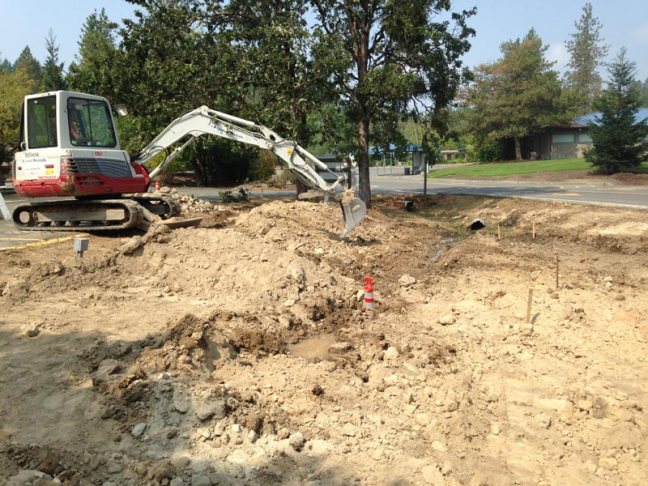
Rogue Community College and Sustainable Rogue Valley are working together to complete the demonstration Raingarden and Bioswale on the Redwood Campus. This project has been funded by the Oregon Watershed Enhancement Board to construct the initial work of digging the drainage basin and filling with mulch and was completed during the summer of 2017 by the local Williams Creek Watershed Council.
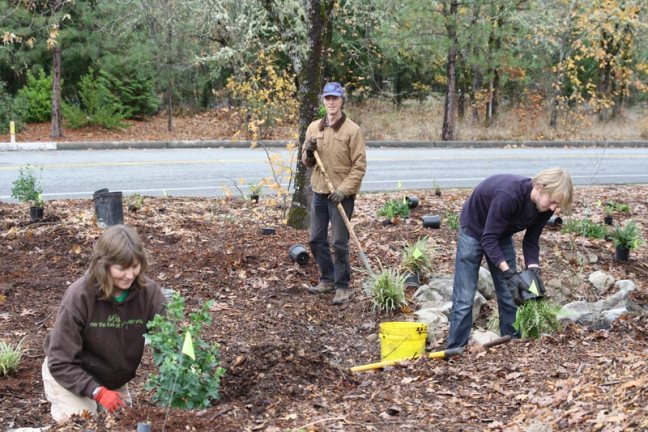
Volunteers are needed to help complete the project. Sustainable Rogue Valley is a local concerned group working to find solutions to making our world a more livable place for all. We offer community service projects and education about bioswales, raingardens, and other sustainable ideas. Individuals and local groups interested in getting involved in planting, shaping, and maintaining this active demonstration project can visit our website, sustainableroguevalley.org, for more information. If you would like to help with completing the Raingarden contact the Project Manager, Chas Rogers, at crogers@roguecc.edu.
Volunteer opportunities are scheduled for anyone to get involved. Students are welcome and encouraged to experience this project firsthand. This winter we will be completing our wetland and flower planting on February 16th. On March 16th we will construct our trail designed to encourage people to walk and discover the project. On Earth Day at Redwood Campus, April 19th we will have tours of the site and plan to install more signs describing the project. Please feel free to show up at the Josephine Building parking lot between 10 am and 2 pm on Feb 16th or March 16th.
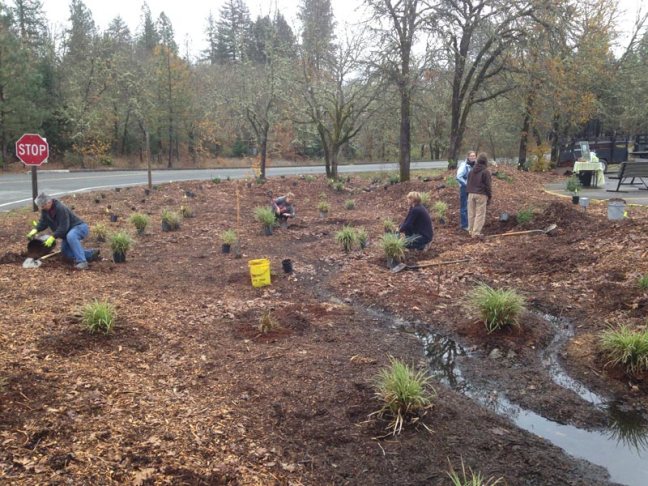
Raingardens collect rainwater runoff in basins and ponds encouraging water to slow down and filter through plant roots and seep into the ground. With a healthy and varied plant community, it can produce a pleasing environment while providing a vital function in the watershed. The RCC Raingarden collects runoff from the campus and filters it through a bioswale.
Bioswales are made to collect rainwater runoff and filter through wetlands where unique wetland plants are growing. These plants can help break down pollutants such as oil from parking lots and roadways as they filter into the ground during runoff. Bioswales contain organic matter that acts as a sponge along with plants that hold and break down contaminants from impervious landscapes such as parking lots and roads.
The wetlands on RCC campus collect runoff, filter and clean contaminants from several parking lots, letting water seep into the ground or enter the natural drainage systems. Signs posted onsite help explain the project and its goals, showing the pattern of runoff, types of wetland plants growing, and how this could help clean water and improve watershed health. We hope this demonstration site will inspire others to build Raingardens and Bioswales to improve water quality and beautify the landscape.
Join us Sunday at 12:30 at the UU Fellowship at 129 NW E St., Grants Pass, OR for our Monthly meeting. We will be meeting every SECOND Sunday from now on – so change your calendars so you don’t miss a meeting!
This months meeting facilitator is Constance Palaia and this months agenda topics are:
Contact information in the Catalyst
Financial Report
Fairgrounds Gardens
RCC Raingarden and Bioswale
Earth Day (RCC event, UUGP)
Blue Zone Project
Transition Handbook/RCC Sustainability Class
ACES
Miscellaneous
Join us and help build a more resilient community!
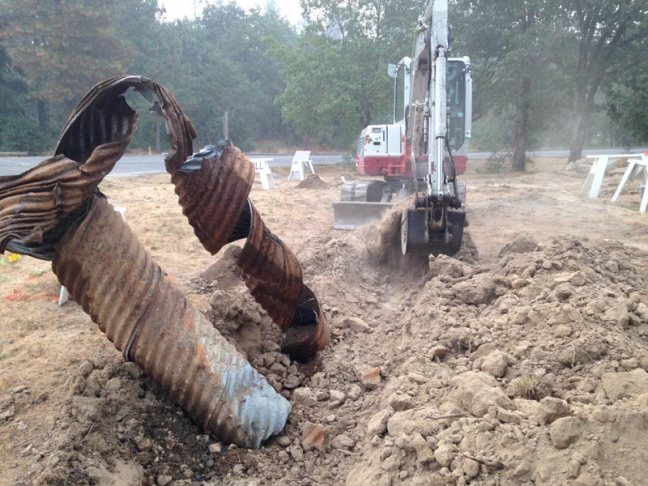
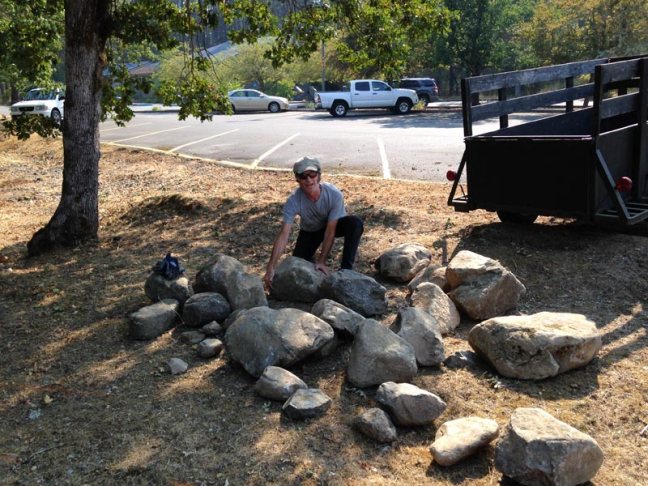
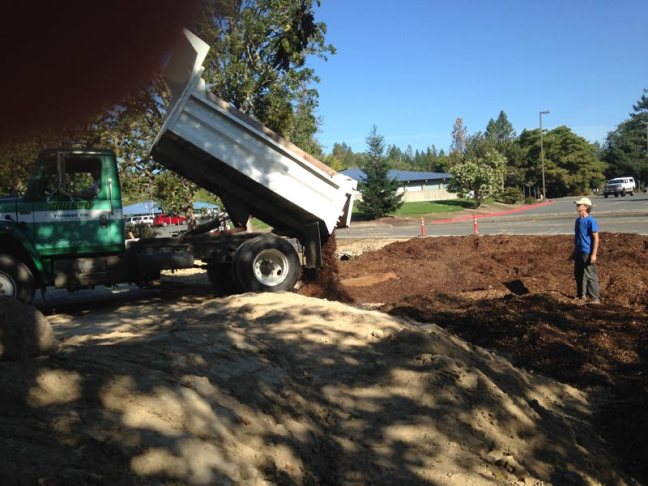
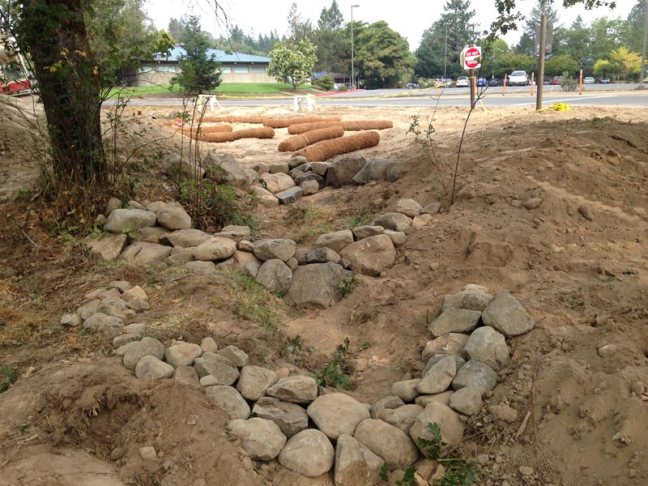
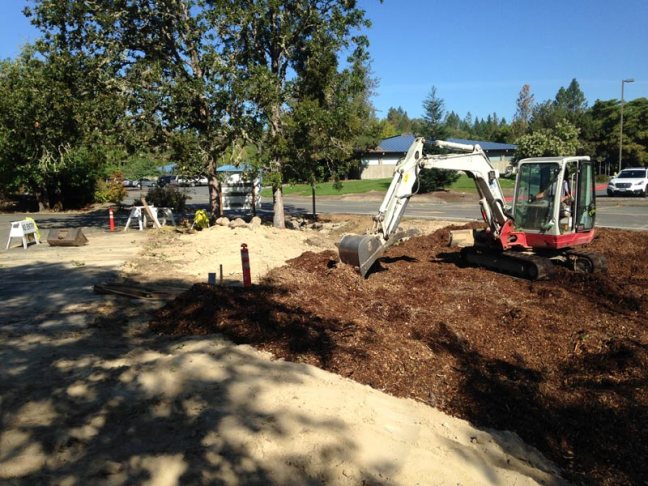
Here are pictures taken this summer and fall of the progress on the Project. Chas Rogers has done an amazing job – not only writing the grants, but coordinating the work and DOING a huge amount himself! We just had a big planting day before Thanksgiving and LOTS of folks showed up – RCC students as well as SRV members!
There is more to come (big boulders and more plants in early 2018), so check back from time to time to watch the progress! And go to RCC to check it out in person!
Shaping the landAn unusual summer rain storm gave a nice test of the newly shaped waterway!Digging out an old culvertChas – the rock guy!Lovely mountains of wood chips to top dress it allCoir bales to slow the flow of water down as it flows into newly created rocky spillway
Lots of help on the first Planting Day!
Newly installed full color metal interpretive Sign and some happy planters!And the first good test of the flow…
The following article was just posted by Utne – an online and paper magazine. Sustainable Rogue Valley is presently in the midst of creating a large demonstration Rain Garden and Bioswale at Rogue Community College Campus in Grants Pass, OR., and created and care for a small version at the Josephine County Fairgrounds in 2016.
Communities across the country are devising creative ways to make water conservation work.
By Cynthia Barnett, from Orion
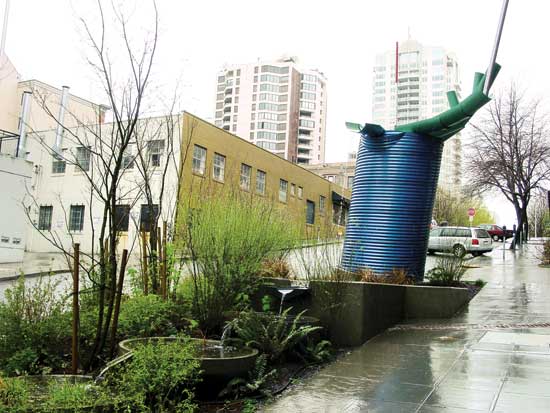
Trudge the sidewalks northwest to Seattle’s Belltown neighborhood, hang a left on Vine Street toward the sound, and a ten-foot-tall, bright blue rain tank pops from the dullness, tipped whimsically toward a red brick office building. Photo By Buster Simpson
On a winter’s day in Seattle, a leaden monotony hangs over the Central Business District, dispiriting to this part of downtown. Contrary to reputation, the urban pallor is not born of rain, which falls almost imperceptibly from silvery clouds that match the nearby waters of Puget Sound. Rather, the gloom rises from the cement hardscape. The busy streets are paved dark gray, the wide sidewalks beside them light gray. The skyscrapers rise in shades of gray. The hulking freeways, ramps, and overpasses: gray. The monorail track and its elephantine pillars: gray.
Trudge the sidewalks northwest to Seattle’s Belltown neighborhood, hang a left on Vine Street toward the sound, and a 10-foot-tall, bright blue rain tank pops from the dullness, tipped whimsically toward a red brick office building. Atop the tank, green pipes in the shape of fingers and a thumb reach out, the stretched index finger connected to a downspout from the rooftop. Rainwater flows from roof to finger to palm to thumb, from which it pours to a series of descending basins built between the sidewalk and the street. They, in turn, cascade to landscaped wedges growing thick with woodland plants. For two blocks, as Vine slopes toward the sound, water trickles down a runnel and through street-side planters, shining stones, and stepped terraces, enlivening the roadway with greenery, public sculpture, and the sounds of falling water.
The project, called Growing Vine Street, began as a small, water conservation effort among residents and property owners to turn their stretch of a former industrial neighborhood into an urban watershed. Twenty years later, it is a big part of the answer to the largest single source of pollution fouling Puget Sound and most of the major bays and freshwater ecosystems of the United States—stormwater.
The gray shellac of a city repels more than the imagination. When rain flows along streets, parking lots, and rooftops rather than percolating into the ground, it soaks up toxic metals, oil and grease, pesticides and herbicides, feces, and every other scourge that can make its way to a gutter. This runoff impairs virtually every urban creek, stream, and river in Washington. It makes Pacific killer whales some of the most PCB-contaminated mammals on the planet. It’s driving two species of salmon extinct, and kills a high percentage of healthy coho within hours of swimming into Seattle’s creeks, before they’ve had a chance to spawn.
Returning some of nature’s hydrology to the cityscape can make an enormous difference—or could—as more individuals, businesses, and neighborhoods remake their bit of the terra firma. Washington State University scientists have found that streets with rain gardens clean up 90 percent or more of the pollutants flowing through on their way to the sound. Green roofs reduce runoff between 50 and 85 percent and can drop a building’s energy costs by nearly a third. Cisterns like the one on Vine Street solve two problems, reducing runoff and capturing water for outdoor irrigation—which in summer can account for half a city’s freshwater demand.
The program Travis Owen was doing for the March 26th SRV meeting – on the wild bees of Southern Oregon – has been postponed until a later date due to weird weather throwing off the Honeybee business. We are shooting for June. Please check back with us. We look forward to this program!
We are joining with the Unitarian Universalists at a table at this years Siskiyou Film Festival. We hope you will support KS Wild by going to the FilmFest on Sunday afternoon from 3 pm – 8 pm for several hours of wonderful entertainment, education and good locally sourced food by Chef Kirsten.
Learn more about the recently funded RCC RainGarden and Bioswale Project we will be doing in collaboration with the RCC folks in 2017-18. We are beginning the planning for it at the February 26th meeting.If you are interested in helping or learning more come to the February meeting.
A part of the site of the upcoming RCC RainGarden and Bioswale Project
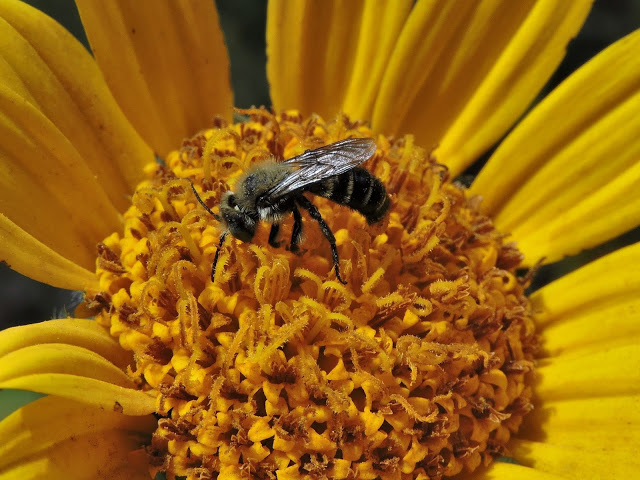
Then, at the March meeting, we are fortunate enough to have Travis Owen, a local wild bee expert (or “amateur anthecologist”!) speaking to us about our local bees and ways we can protect and support them as well as learn to recognize them! This will be on March 26th at the UU Fellowship at 12:30 pm. We hope you will join us! Find lots of interesting material on bees, wasps and moths on his website: http://www.amateuranthecologist.com/
I hope that everyone is getting off to a good new year. I wanted to let you know about upcoming opportunities for restoration plantings on a few small streams in our area.
Gilbert Creek Park (Grants Pass):
Jan 279:00 – 2:00 pm: Prep, willow cutting
Feb 38:30/9:00 – 2:00 pm: Planting (some high school kids will hopefully be joining us).
Blue Heron Park (Phoenix) :
Feb 6 Noon-3:00 pm: With Phoenix High School. We would gladly take 2-4 volunteers here in the morning to help with willow cuttings for the kids.
Feb 9 – 9:00 am – early afternoon Willows cutting and planting, some brushwhacking, re-fencing trees to protect against the beaver, prep for irrigation
Feb 23 – 9:00 am – early afternoon – Trees and irrigation laying
Thompson Creek (Selma) with Oregon Stewardship:
Feb 16 – If a few volunteers would like to join here, that would be great. Please let me know beforehand. Otherwise, Jim Hutchins will have most of this taken care of, but I’ll be joining him.
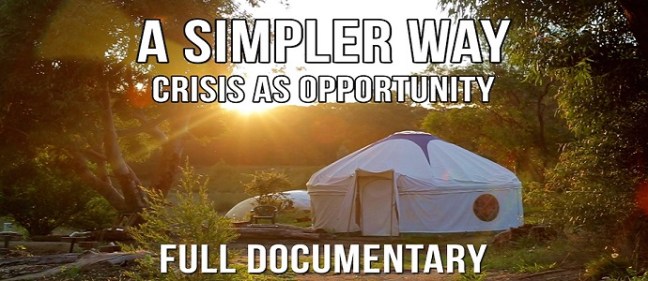
Below we have posted the full documentary of “A Simpler Way: Crisis as Opportunity”, an inspiring new documentary produced by Jordan Osmond (http://happenfilms.com/) and Samuel Alexander (http://simplicityinstitute.org/). We encourage people to organise their own, non-profit screenings of this important new film in the hope of sparking a broader cultural conversation about the importance of voluntary simplicity, permaculture, and economic relocalisation in an age of limits.
Please share this film with friends and family and help spread the word through your online networks.
The film can also be purchased for download at Happen Films.
The overlapping economic, environmental, and cultural crises of our times can seem overwhelming, can seem like challenges so great and urgent that they have no solutions. But rather than sticking our heads in the sand or falling into despair, we should respond with defiant positivity and try to turn the crises we face into opportunities for civilisational renewal.
During the year of 2015 a small community formed on an emerging ecovillage in Gippsland, Australia, and challenged themselves to explore a radically ‘simpler way’ of life based on material sufficiency, frugality, permaculture, alternative technology and local economy. This documentary by Jordan Osmond and Samuel Alexander tells the story of this community’s living experiment, in the hope of sparking a broader conversation about the challenges and opportunities of living in an age of limits.
The documentary also presents new and exclusive interviews with leading activists and educators in the world’s most promising social movements, including David Holmgren (permaculture), Helena Norberg-Hodge (localisation), Ted Trainer (the simpler way), Nicole Foss (energy and finance), Bill Metcalf (intentional communities) and Graham Turner (limits to growth).
TO SUPPORT THE GREAT WORK OF SAMUEL AND JORDAN
Please visit their website’s or support them on patreon.com






 Environmental Workshop – FREE
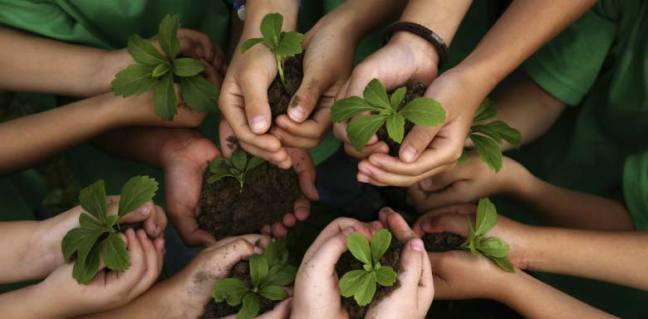
 Volunteers Needed for Planting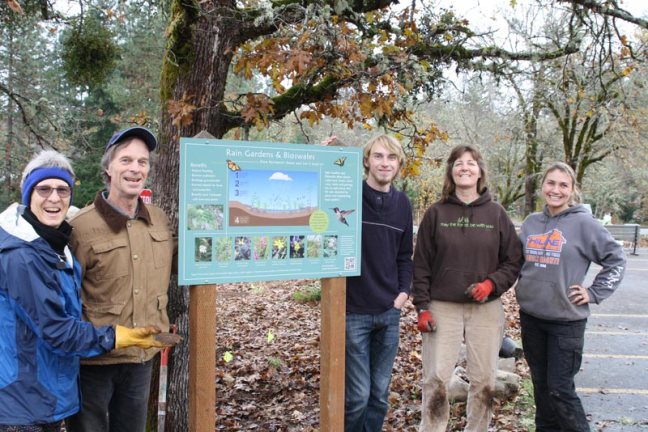








 sustainableroguevalley.org